|
|
|
 |
|
 |
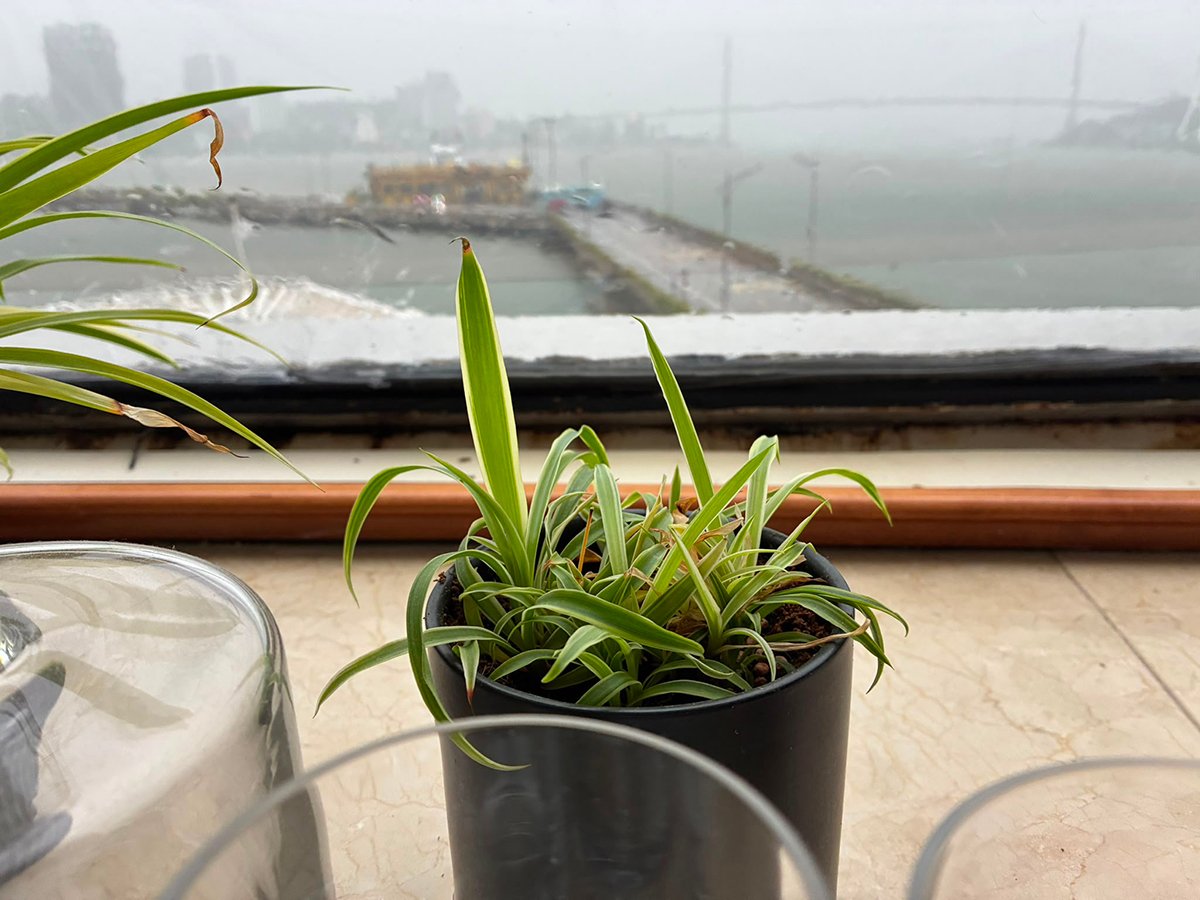 |
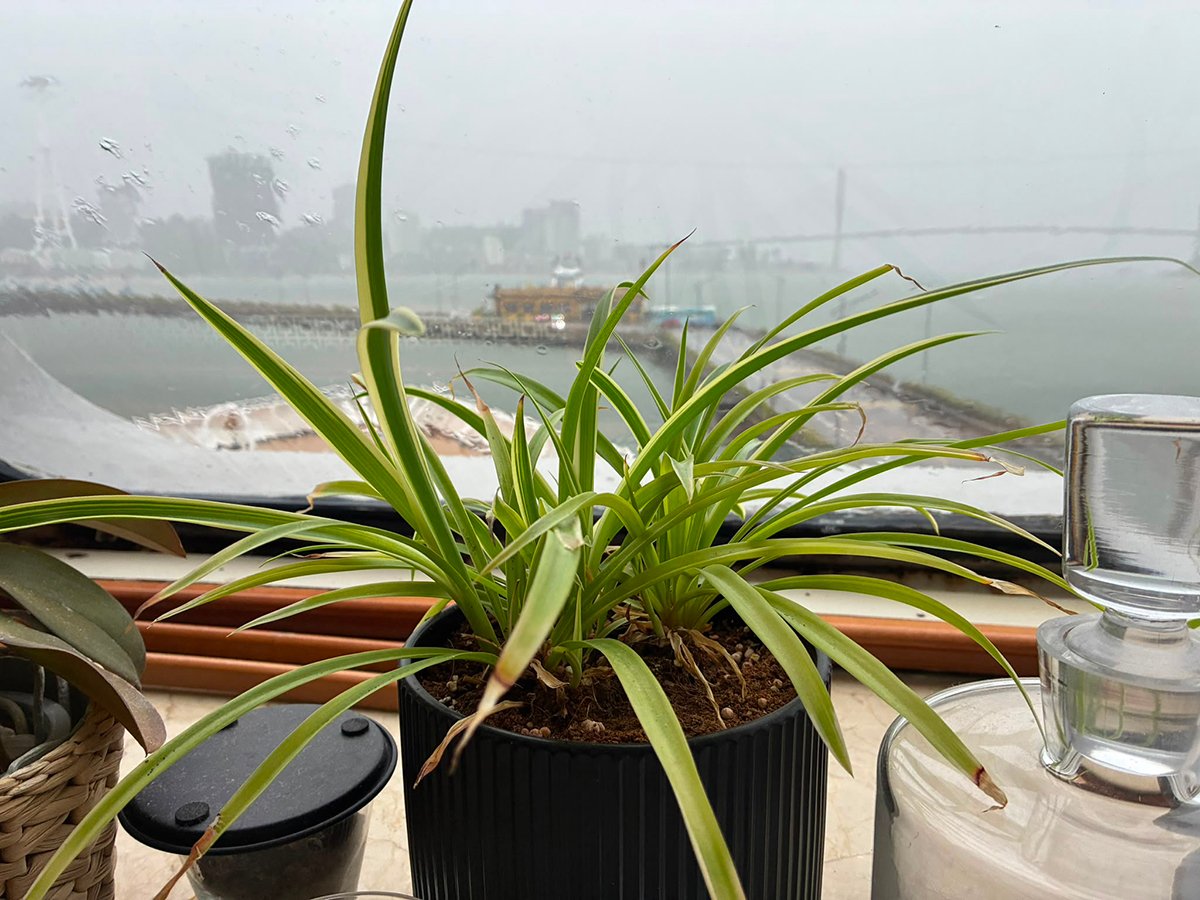
| Very heavy rain in Ha Long Bay - tending to the plants, new fertilizer has induced new growth | |
 |
|
 |
|
 |
|
|
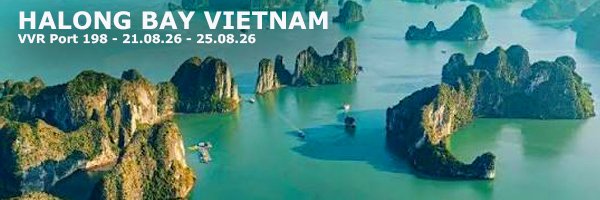
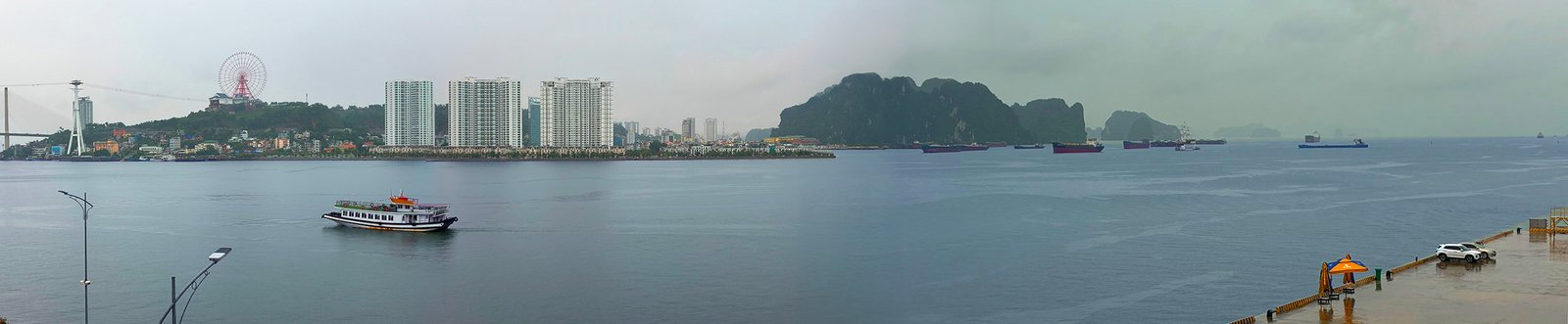
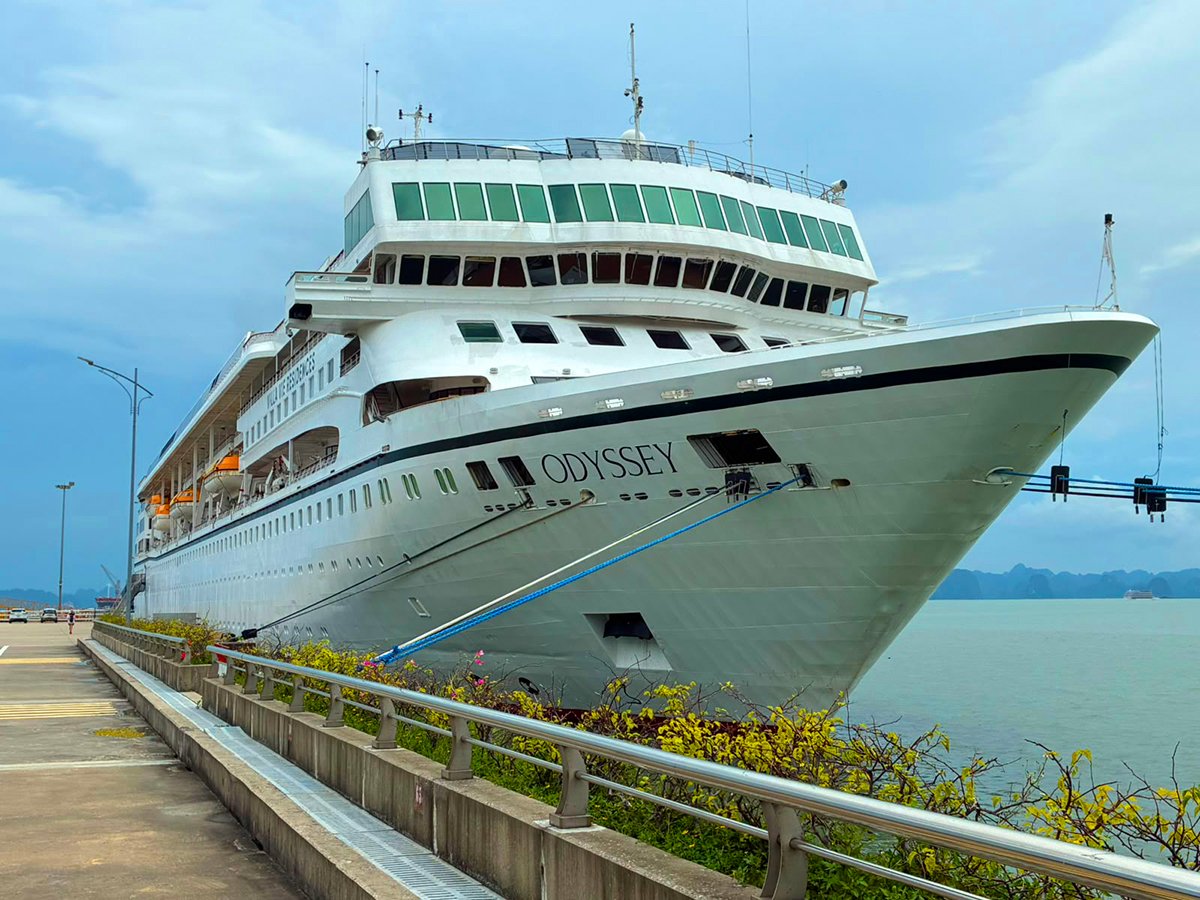
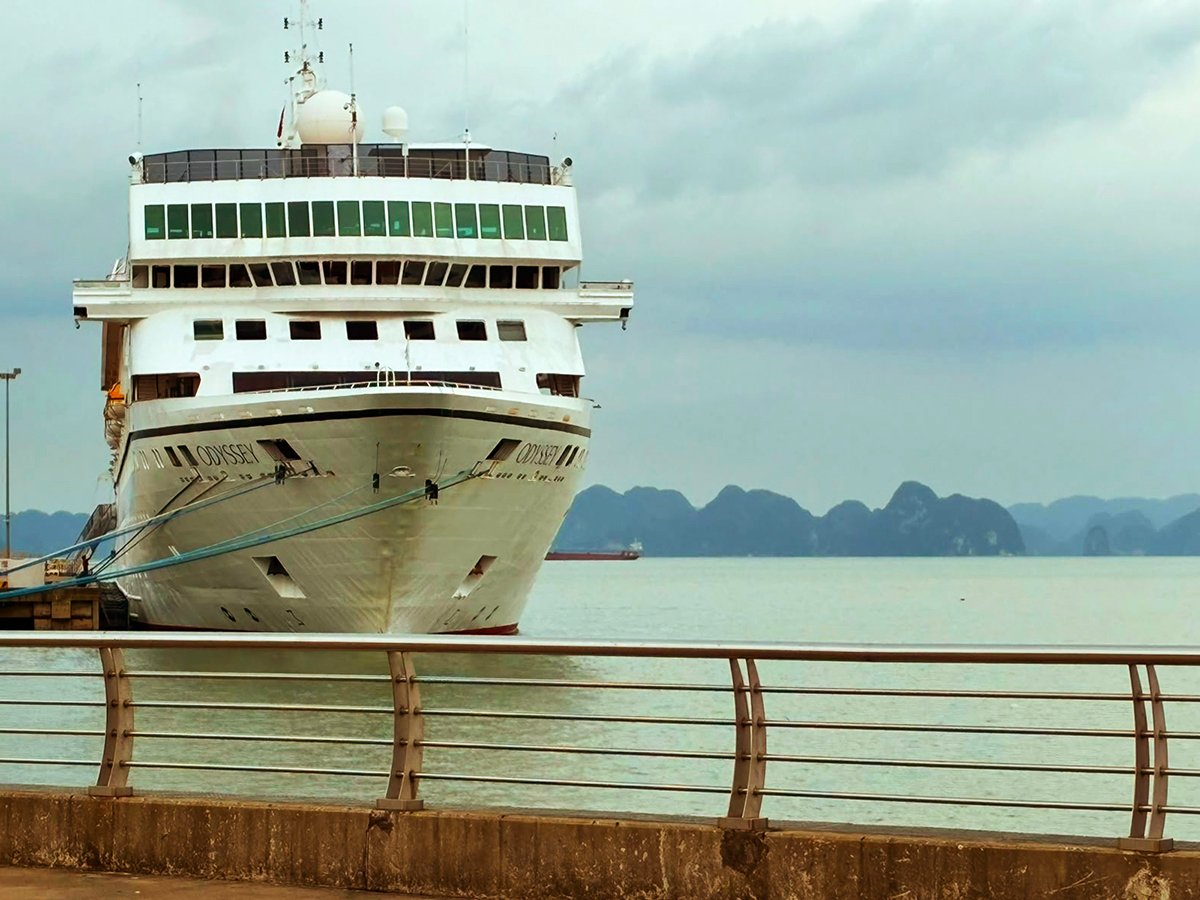
After the Odyssey: Ha Long Bay August 21–25, 2026 Marti Eicholz We left Chan May, Hue, as if slipping from one dream into another. Behind us lay the long green shoulders of central Vietnam, the rivered memory of emperors and incense, the soft melancholy of rain on stone. Ahead, beyond the Gulf of Tonkin, waited Ha Long Bay, though at the time it was only a name on the itinerary, a promise written in blue ink, a place I had imagined but not yet understood. The Odyssey pushed north with unusual urgency, traveling at a swift pace to outrun the storm. By the time we arrived mid-morning on August 21, one full day earlier than expected, the sky had lowered itself over the bay like a great pewter lid. Clouds gathered in many shades of gray: pearl, ash, charcoal, slate. Rain stitched the distance together. Mist hovered over the water in veils so fine they seemed less weather than breath. And yet, even through that hush of rain and cloud, we could tell we had arrived somewhere extraordinary. The islands appeared slowly, not all at once, but by revelation: dark shapes shouldering their way out of the mist, limestone towers rising from emerald water like the backs of sleeping dragons. Some were sheer and solemn, some rounded and green, some sharp as ancient teeth. They stood everywhere and nowhere, vanishing as soon as we tried to count them, multiplying in the haze like thoughts at the edge of waking. Ha Long means “where the dragon descends,” and in that first gray morning the legend felt less like folklore than weather report. The bay seemed made by something immense and benevolent passing through, something scaled, patient, and old enough to carve a world by resting its body upon it. Across 43,400 hectares, more than 1,600 islands and islets rise in forms both majestic and intimate; across the wider seascape, nearly 2,000 limestone formations scatter themselves like relics of a drowned cathedral. Their cliffs, arches, caves, and hidden lagoons are the visible grammar of time itself, written by tropical rain, retreating seas, and 500 million years of stone learning how to become wonder. What astonished me first was the quiet. Not silence exactly; the bay had sounds: rain tapping the decks, the low churn of boats, gulls calling somewhere beyond sight, the soft slap of water against hulls. But beneath it all was a deeper quiet, the quiet of a place that does not perform grandeur; it emanates it. The landscape invites reverence and then rewards it with more mystery. In the rain, the water was not merely green but countless greens: bottle glass, jade, moss, the underside of a leaf. The karsts leaned over it with the gravity of old guardians. Their faces were streaked with vines and weather, with the long dark trails of mineral tears. At times the mist erased the bases of the islands so that each tower seemed to float, unattached to earth or sea, suspended between origin and afterlife. It is easy to list the facts, and the facts are miraculous enough: Ha Long Bay lies in Quang Ninh Province in northeastern Vietnam, roughly 165 kilometers east of Hanoi. It has been recognized repeatedly by UNESCO for its exceptional natural beauty and geological importance, most recently in an expanded inscription that includes the Cat Ba Archipelago. It holds caves with names like Sung Sot, or Surprise Cave, and Luon, reachable only by boat; it shelters mangroves, coral reefs, seagrass beds, tidal lagoons, fish, birds, reptiles, mammals, and more forms of green life than the eye can separate from the stone. But the bay refuses to remain a catalog. Each statistic dissolves into sensation. The 1,969 islands and islets are not numbers when they rise before you; they are apparitions. The caves are not attractions but hidden chambers in the ribcage of the earth. The shallow depth, only about ten meters at its deepest point, does not diminish the place, but makes it stranger: all this majesty standing in water that seems less abyss than mirror. Somewhere within these limestone walls are traces of human presence reaching back thousands upon thousands of years, Soi Nhu, Cai Beo, Ha Long cultures, names that sound like the first syllables of civilization whispered from cave mouths. People lived here long before us, fished here, sheltered here, read the tides and weather as scripture. Even now, floating communities such as Cua Van carry forward a life shaped by water: houses resting on the bay, boats moving like errands of light, nets and fish farms and the daily genius of adaptation. From the deck, I tried to imagine living there, not visiting but belonging, waking to limestone silhouettes instead of streets, learning the moods of water as others learn traffic lights, measuring distance not in miles but in channels, currents, and weather. A floating village is easy to romanticize from afar, harder and more beautiful when considered as a real endurance, a community balancing tradition, labor, change, and the pull of tourism beneath the same immense cliffs that have watched over generations. There was something deeply moving about arriving early because of a storm. We had been hurried there by danger, carried ahead of schedule by the need to keep moving, and yet the place we reached seemed to exist outside schedules altogether. The itinerary said one thing; the weather wrote another. Ha Long Bay accepted us not with sunlight and postcard clarity, but with the more intimate welcome of obscurity. It did not unveil itself. It allowed us to approach slowly. Perhaps that is why the bay felt personal. Not because it belonged to us, it emphatically did not, but because the mist made an interior landscape of it. Every island seemed like a memory partially recovered. Every channel felt like a sentence one could not quite finish. After weeks of movement, ports, temples, markets, meals, heat, rain, and the constant outwardness of travel, Ha Long Bay turned us inward. It gave us scenery, yes, but also a mood: reflective, suspended, almost prayerful. I thought of the Odyssey itself, our ship, but also the older odyssey, the human habit of leaving and returning, of seeking meanings we rarely know how to name until later. Travel is often described as discovery, but just as often as surrender: to weather, time, fatigue, surprise, and the way a place rearranges the furniture of the mind. We had left Hue and arrived in a bay made of dragons, caves, ancient settlements, floating lives, and rain. We arrived, and something in us grew quieter. Later, there would be brighter moments: glints of sun on water, the possibility of caves and beaches, stories of pearl farms, seafood fragrant with steam and salt, squid cakes and shellfish and the promise of meals taken close to the source of their making. There would be the lively human layer of the bay, its tourism, its boats, its guides, its astonished visitors with cameras raised. But my first Ha Long will always be the gray one, the bay before it became spectacle, before it clarified into view. That first morning remains: the Odyssey steady beneath us; the rain softening the horizon; the limestone towers lifting themselves from cloud and water as if from myth; the sense, immediate and unmistakable, that we had entered not simply a destination but a presence. Ha Long Bay did not ask to be understood. It asked to be received. And perhaps that is the gift I carried away from Ha Long Bay: not a list of sights completed, not even the satisfaction of seeing a famous place at last, but the memory of being briefly stilled by something older, larger, and more patient than any journey. After the urgency of the storm and the long motion of the sea, the bay offered a different kind of arrival, one measured in mist, stone, water, and wonder. We had come after the Odyssey, but Ha Long Bay reminded me that some destinations do not end a voyage so much as deepen it. |
|
|
Copyright © 2026 All rights reserved |
|