|
|
 |
 |
|
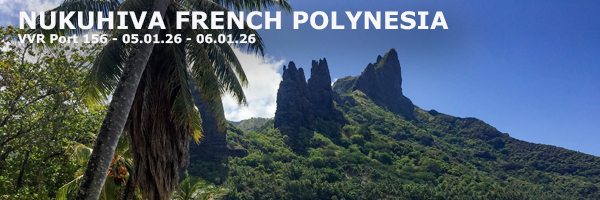
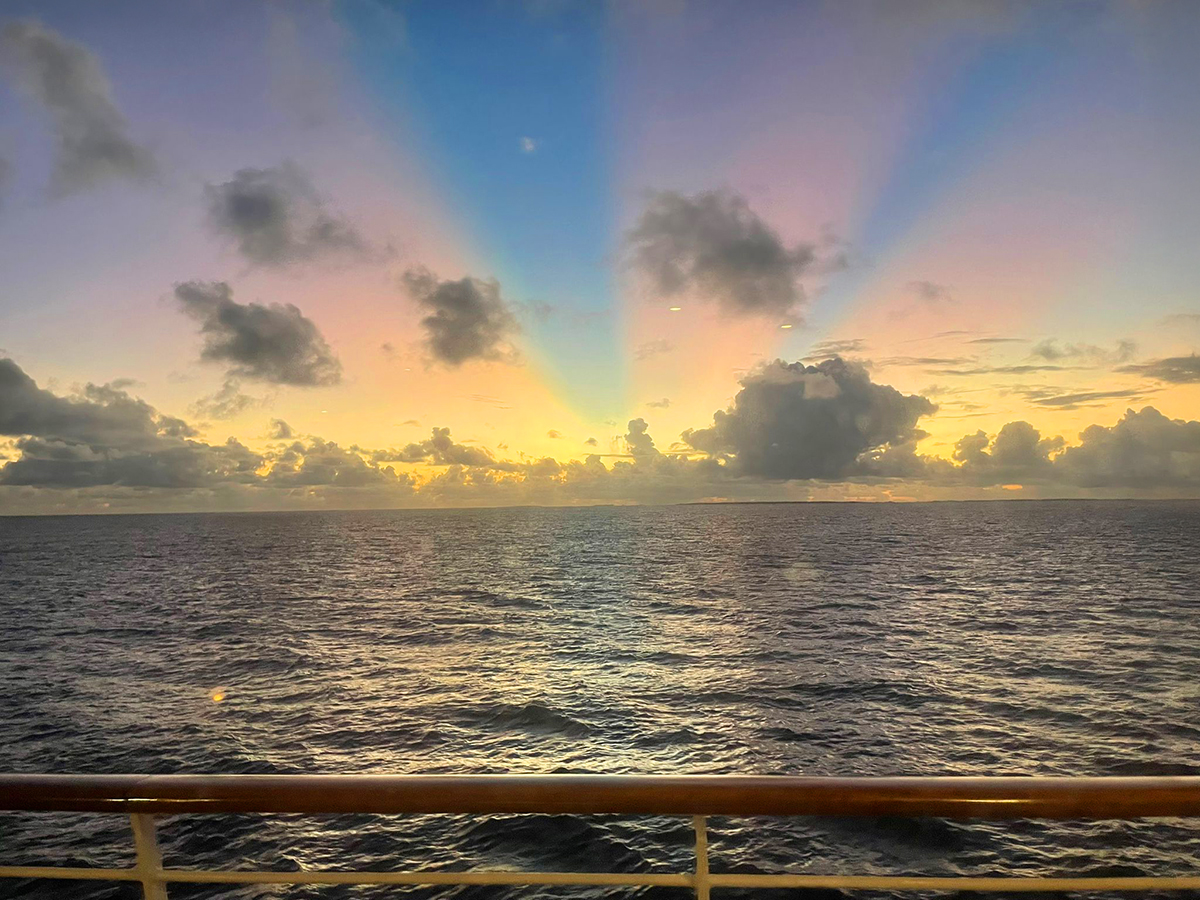
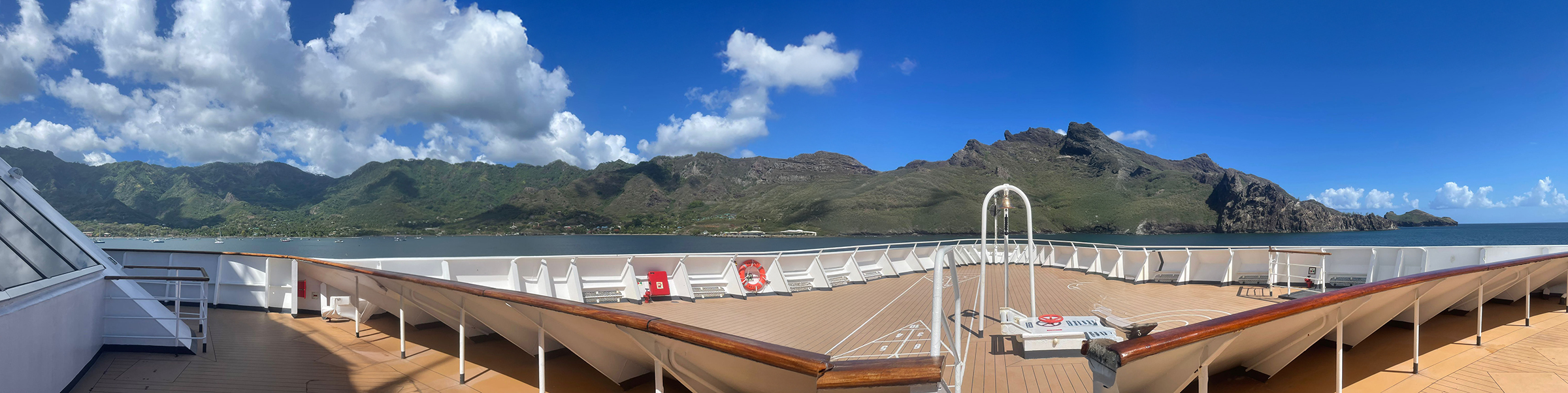
January 4-6, 2026 Marti Eicholz The voyage from Fakarava to Nuku Hiva in the Marquesas Islands is a true oceanic journey, marked by a full day at sea traversing vast stretches of open water. As I sit by the window, I am mesmerized by the ever-shifting canvas of the sky: heavy clouds roll in, casting the sea below into shadow while a misty veil blurs the horizon and rain limits visibility. Yet, just as suddenly, the sky brightens—sunlight breaks through, illuminating patches of brilliant blue dotted with fluffy, white clouds. The cycle repeats itself endlessly: darkness and light, cloud and sun, each taking their turn. Amid these dramatic changes, the ship moves steadily forward, constantly responding to the ocean’s moods. There are moments when the ride grows lively, as choppy waves set the vessel swaying and bouncing, making every step an adventure. Patience becomes a companion—waiting out the rain, relishing the return of sunlight, and embracing the rhythm of life at sea. The journey is not just a passage across water, but an immersion in nature’s raw and beautiful unpredictability. The Marquesas Islands, fondly referred to as “The Land of Men,” form a remote, rugged volcanic archipelago in French Polynesia. Located far northeast of Tahiti in the vast South Pacific, the Marquesas rank among the most isolated island groups in the world, which has profoundly shaped their extraordinary biodiversity and cultural identity. Renowned for their volcanic origins, these islands feature breathtaking landscapes marked by steep mountains, jagged peaks, towering cliffs, deep valleys, and cascading waterfalls. Instead of tranquil lagoons, the coastlines are wild and reef-less, with powerful surf pounding the shores. You encounter wild horses roaming freely and discover rare endemic plants and animals that thrive nowhere else on earth. The absence of barrier reefs adds to the islands’ rugged, unspoiled beauty. The Marquesas are deeply rooted in ancient Polynesian tradition, with remarkable archaeological sites such as tiki statues and ceremonial platforms scattered across the islands. The unique wildlife and dramatic scenery have inspired artists like Paul Gauguin and Jacques Brel, who found solace and creativity in this isolated paradise. The islands radiate a strong spiritual essence known as mana, which permeates both the natural environment and the rich culture. Our journey aboard the Odyssey brings us to Taiohae Bay, a spectacular, circular harbor created from the remnants of a collapsed volcano. Towering, jungle-covered cliffs surround this well-protected, calm anchorage, which serves as Nuku Hiva’s main harbor. The serene, crystal-clear blue waters are framed by lush, green mountains, creating a breathtaking setting. Upon arrival, we tender to a pier in the heart of Taiohae village—the small capital of Nuku Hiva. This walkable community is dotted with local shops, bustling markets, charming cafes, the striking cathedral, and a helpful tourist information center. From here, you can join organized 4x4 excursions to explore Nuku Hiva’s legendary valleys, fascinating archaeological sites, and stunning waterfalls. Nuku Hiva stands as the largest volcanic island in the Marquesas archipelago of French Polynesia, situated in the central South Pacific. Its dramatic terrain is defined by deep fjords, soaring peaks, basalt cliffs, and verdant valleys, all embraced by a tropical climate that is warm and humid year-round. Notably, the island lies outside the cyclone belt, minimizing the threat of tropical storms. A population of approximately 3,000, mostly residing in Taiohae—the regional capital—sustains itself through traditional carving, hunting, fishing, and a modest but growing tourism industry. The town’s architecture blends colonial influences with indigenous styles, featuring landmarks such as the Notre Dame Cathedral with its exquisite woodwork and the imposing Tiki Tuhiva statue. Other villages, like Hatihe’u and Taipei, are celebrated for their picturesque landscapes and vibrant cultural heritage. Historically, Nuku Hiva was settled by Polynesians who arrived from Western Polynesia, with evidence of established communities dating back to the 13th and 14th centuries. Society was organized under hereditary chiefs, guided by intricate religious beliefs centered on deities like etua, and punctuated by significant ceremonial sites known as tohua. Local legend tells that the god Maui fished these islands from the sea, with Nuku Hiva symbolizing the roof of the house. Today, the island preserves its ancient heritage through archeological treasures like Kamuihei and Hikokua, which bear witness to a rich and enduring culture. Nuku Hiva’s volcanic landscapes are truly awe-inspiring, dominated by Mount Tekao and world-class waterfalls such as Hakaui. The island supports a diverse array of flora and fauna, and local artisans create intricate wood and stone carvings (tikis) whose origins remain shrouded in mystery. Traditional tattoos, tapa cloth, and ancient paepae platforms further reflect the island’s vibrant artistic legacy. The cultural history of Nuku Hiva is both fascinating and complex, including tales of cannibalism and fierce warrior traditions. Despite its wild past, the island has evolved into the economic heart of the Marquesas, offering a unique blend of untamed nature, enduring mysteries, and modern Polynesian life. For the adventurous traveler, Nuku Hiva offers countless opportunities. Hiking to the dramatic Vaipo Waterfall and exploring lush valleys allow for deep immersion in nature, while visits to ancient Tohua sites and bustling art markets provide rich cultural experiences. Wandering through the main town reveals local artistry and the beauty of Notre Dame Cathedral. The surrounding waters invite explorers to dive into underwater caves and sheer drop-offs, teeming with pelagic fish and offering thrilling encounters with hammerhead sharks, manta rays, and dolphins. Scenic tours by 4x4, horseback riding, and even paragliding showcase the island’s grandeur, with highlights including the breathtaking bays of Hatiheu and Taiohae. Nuku Hiva evokes a profound sense of awe and wonder with its dramatic cliffs, lush rainforests, and ancient traditions. The presence of hidden secrets beneath dense foliage and stories of a once-cannibalistic past add layers of intrigue and mystery. You feel as if you’ve stepped into a wild, untouched world where vibrant local customs coexist with deep tranquility, remoteness, and an intimate connection to both nature and history. The grand landscapes contrast beautifully with a slow, authentic pace of life, inviting reflection and appreciation. During our visit, we were privileged to witness a dynamic cultural show that brought Marquesan heritage vividly to life. The performance featured passionate renditions of traditional song, rhythmic drumming, and expressive dance. Participants wore authentic attire, including woven skirts, flowers, and feathers, enhancing the visual spectacle. The event blended powerful storytelling, athletic displays, and graceful movements, portraying both warrior strength and spiritual reverence. It was a communal celebration that offered an immersive glimpse into the unique spirit and heritage of the Marquesas Islands. As the Odyssey prepares to depart Nuku Hiva, there is a discernible sense of farewell to a living landscape where nature and ancient culture merge seamlessly. The memories created here are unforgettable and primal, leaving a lasting impression of a place where the power of nature and the depth of tradition continue to resonate. |
|
Copyright © 2026 All rights reserved |